It’s staggering to consider: urban areas consume nearly three-quarters of the planet’s resources and are responsible for over 70% of global carbon emissions. But cities also hold the greatest promise for change. They offer unparalleled opportunities to rethink transportation, renewable energy, green spaces, and governance in ways that can drive the climate transition.
India, in particular, faces rapid urban growth unlike any other nation. Government programs, such as the Smart Cities Mission, AMRUT, and Swachh Bharat Abhiyan, are driving development forward; yet, the demand for resilient, people-focused urban environments has never been greater.
10 Cities Reimagining Urban Sustainability in 2025
Amsterdam, Netherlands – A Living Circular Economy
Initiative: Amsterdam embraced the Doughnut Economics model, reshaping how the city plans and grows.
Impact: Almost all new buildings (95%) use recycled materials, and food waste has fallen by 31%.
Why it Matters: Amsterdam is proving that an economy can be regenerative, putting people and the planet first.
Ahmedabad, India – From Heatwaves to Heat-Resilience
Initiative: India’s pioneering Heat Action Plan (HAP) started here and is now being adopted nationwide.
Impact: Since 2013, Ahmedabad has cut deaths from heatwaves by 43%.
Why it Matters: The city shows how proactive health policy saves lives in a warming world.
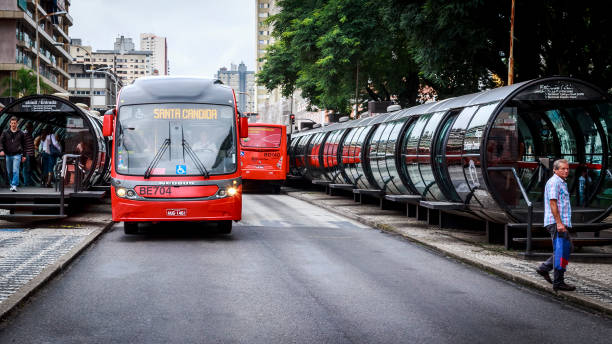
Curitiba, Brazil – Transit-Driven Sustainability
Initiative: Known as a trailblazer in bus rapid transit (BRT), Curitiba couples efficient transport with large green spaces.
Impact: The city conserves 27 million litres of fuel annually, with parks covering 45% of its area.
Why it Matters: It’s a powerful example of how transit can shape greener, more liveable cities.
Copenhagen, Denmark – Net-Zero by Design
Initiative: Copenhagen is racing to be the world’s first carbon-neutral capital by 2025.
Impact:62% of residents bike every day, and wind power generates 100% of the city’s electricity.
Why it Matters: Here, smart design and everyday habits combine perfectly for a sustainable future.
Pune, India – Smart Governance, Smarter Mobility
Initiative: Pune’s open data platforms, digital dashboards, and fleet of e-buses are transforming urban mobility.
Impact: With over 150 electric buses now on the roads, traffic congestion has dropped by 30% in critical areas.
Why it Matters: It’s proof that data-driven governance can make cities run smoother and cleaner.
Singapore – Water Sustainability as Policy
Initiative: The innovative “Four National Taps” strategy blends rainwater harvesting, desalination, and recycled water.
Impact: Reused water now accounts for 40% of the supply, making self-sufficiency by 2060 achievable.
Why it Matters: Singapore turns the threat of water scarcity into a model of resilience.
Freiburg, Germany – Solar City Before It Was Cool
Initiative: Freiburg led early solar energy adoption, car-free zones, and eco-friendly neighbourhoods.
Impact: With over 400 solar projects and emissions 20% below 1990 levels, it’s a beacon of community-driven climate action.
Why it Matters: This city shows how locals can craft their carbon footprint collaboratively.
Surat, India – Flood-Proofing Through Infrastructure & Data
Initiative: Cutting-edge flood mapping and early warnings now protect vulnerable communities, especially in slums.
Impact: Flood-related displacement has dropped 65% during heavy rains in 2023.
Why it Matters: Surat offers a powerful lesson in combining equity with climate adaptation.
Portland, USA – Zoning for Climate Justice
Initiative: Climate-sensitive zoning bans fossil fuel infrastructure and incentivizes green roofs.
Impact: 60% of new developments feature mixed-use plans with low emissions.
Why it Matters: Portland is redefining how urban planning can drive environmental justice.
Rajkot, India – Small City, Big Vision
Initiative: Rajkot is one of the first smaller Indian cities to join the Global Covenant of Mayors for Climate & Energy.
Impact: The city retrofitted 100% of public lighting with LEDs and significantly cut emissions from operations.
Why it Matters: Rajkot proves that even Tier-2 cities can lead boldly in the fight against climate change.
This collection of cities is a vivid reminder that sustainability isn’t about size or wealth—it’s about vision, commitment, and the will to act. They are transforming from centres of consumption into living, breathing ecosystems that nurture both people and planet. And in 2025, their stories offer hope for a greener urban future worldwide.




1 comment
[…] rhythms, leading to sleep disorders and higher risks of obesity and cardiovascular diseases. Urban sustainability needs to be […]