
Author

While fashion brands showcase pristine storefronts in Mumbai and Delhi, the true cost of India’s fast fashion industry manifests in three industrial cities that most consumers never see: Tirupur, Surat, and Panipat. These manufacturing hubs process billions of garments annually, transforming once-thriving ecosystems into environmental disaster zones.

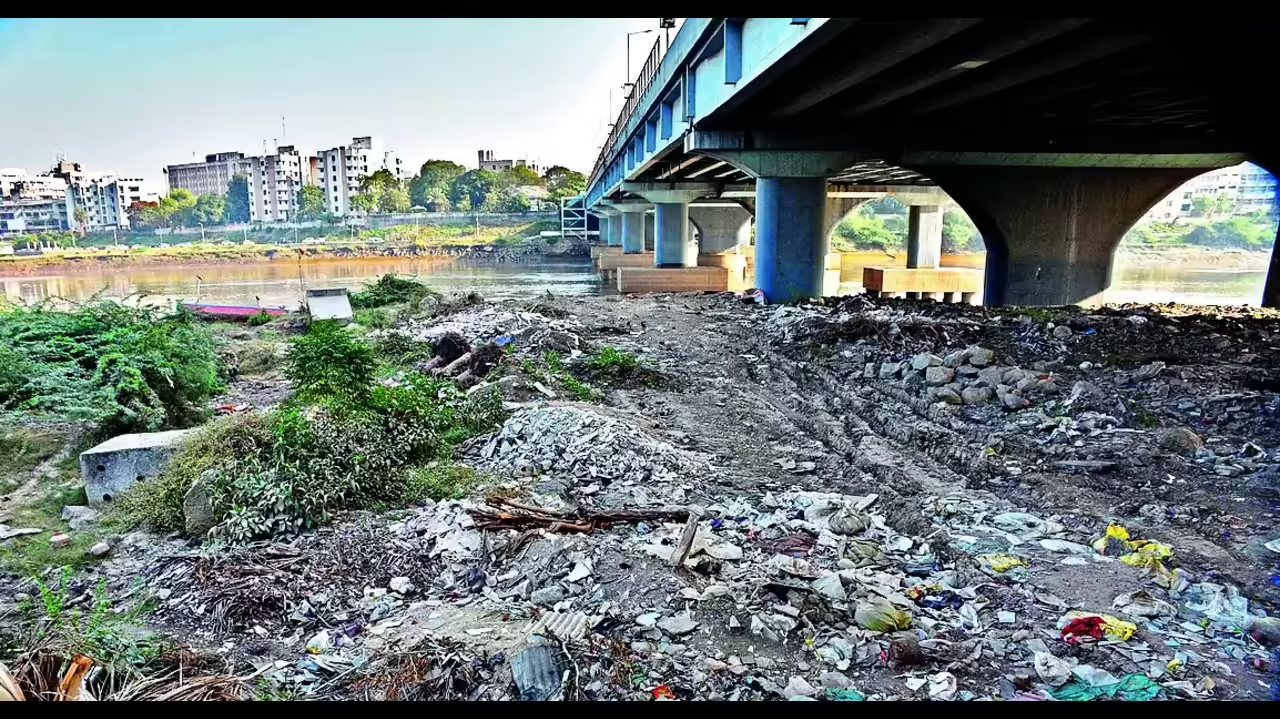
Noyal River Image from The Hindu
Tiruppur, Tamil Nadu: The Dying River
Tiruppur, located 50 kilometres from Coimbatore, has earned recognition as India’s knitwear capital—producing ₹40,000 crores worth of garments annually and accounting for approximately 90% of India’s cotton knitwear exports. The city hosts over 10,000 textile manufacturing units employing approximately 600,000 workers across spinning, weaving, processing, and garment assembly operations.
This economic success conceals an environmental catastrophe centred on the Noyyal River.
The Noyyal River: From Lifeline to Toxic Channel
The Noyyal River, a 180-kilometre tributary of the Cauvery, once supported agriculture across 150,000 hectares in western Tamil Nadu. Today, it functions primarily as a conveyance system for industrial effluent.
Discharge Volumes and Composition:
Tiruppur’s textile units discharge an estimated 700 million litres of untreated or inadequately treated effluent daily into the Noyyal. According to research conducted by the Madras University Environmental Sciences Department in 2018, this effluent contains.
- Heavy metals: Chromium (0.8-2.4 mg/L, exceeding permissible limits of 0.05 mg/L), lead, cadmium, nickel
- Chemical dyes: Azo dyes containing benzidine compounds are classified as carcinogenic
- Processing chemicals: Formaldehyde, sodium hydroxide, acetic acid, hydrogen peroxide
- Total Dissolved Solids (TDS): 3,500-8,000 mg/L (permissible limit: 500 mg/L)
- Chemical Oxygen Demand (COD): 800-1,500 mg/L (permissible limit: 250 mg/L)
- Biological Oxygen Demand (BOD): 250-600 mg/L (permissible limit: 30 mg/L)
The Madras University study documented dissolved oxygen levels between 0.2-1.8 mg/L throughout the Noyyal’s course through Tiruppur—well below the 4.0 mg/L minimum required to support aquatic life.
Agricultural Devastation
Before intensive industrialization in the 1980s-1990s, farmers utilized Noyyal water for irrigating coconut, plantain, turmeric, and paddy cultivation. By 2010, agricultural usage had ceased entirely across most of the river’s course.
A 2015 assessment by the Tamil Nadu Agricultural University documented.
- Soil contamination: Chromium accumulation in agricultural soils reaching 127-384 mg/kg (permissible limit: 100 mg/kg)
- Crop toxicity: Heavy metal accumulation in food crops, including turmeric and vegetables
- Groundwater contamination: Well water within 5 kilometres of textile units showing elevated TDS (2,500-4,500 mg/L) and chromium levels
- Agricultural land abandonment: Approximately 18,000 hectares rendered unsuitable for cultivation
Coconut cultivation, which once thrived along the Noyyal, has declined by approximately 70% in affected districts. Farmers report that remaining trees show stunted growth, premature leaf drop, and reduced yield.
Public Health Implications
Communities residing near textile processing units report elevated incidence of:
- Dermatological conditions, including contact dermatitis and chronic skin irritation
- Respiratory ailments attributed to airborne chemical exposure from dyeing operations
- Gastrointestinal disorders linked to groundwater contamination
- Suspected elevated cancer rates, though comprehensive epidemiological studies remain incomplete
A 2017 survey conducted by the Tamilnadu Science Forum documented that 64% of households within 3 kilometres of textile units reported at least one family member experiencing chronic health issues potentially attributable to industrial pollution.
Regulatory Response and Limitations
The Tamil Nadu Pollution Control Board (TNPCB) operates 17 Common Effluent Treatment Plants (CETPs) serving Tiruppur’s textile sector. However, these facilities face chronic challenges:
- Capacity constraints: Designed capacity of 145 million litres daily versus actual requirement of 700 million litres
- Operational inefficiencies: Many units operate below design specifications due to maintenance issues and power supply interruptions
- Compliance gaps: Spot inspections document frequent violations of discharge standards
- Enforcement limitations: Penalties (₹25,000-50,000 per violation) remain insufficient deterrents for units generating crores in revenue
The Supreme Court of India issued directives in 2011 requiring textile units to achieve Zero Liquid Discharge (ZLD). Implementation remains partial, with smaller units citing cost constraints—ZLD systems require capital investment of ₹2-5 crores per unit.
You might like:The Environmental Impact of Fast Fashion in India: What Nobody’s Telling You About Your ₹500 T-Shirt
Surat, Gujarat: The Synthetic Hub’s Air and Water Crisis
Surat, India’s diamond polishing capital, simultaneously operates as the nation’s synthetic textile manufacturing centre, processing an estimated 40 million metres of fabric daily. The city’s Pandesara and Sachin industrial estates host over 500 textile processing units specializing in polyester, nylon, and blended synthetic fabrics.
Water Pollution in the Tapi River
The Tapi River, which flows through Surat before entering the Arabian Sea, receives discharge from textile dyeing, printing, and finishing operations. The Gujarat Pollution Control Board’s 2022 monitoring data indicates.
- Average BOD levels: 45-78 mg/L (standard: 30 mg/L)
- COD levels: 450-720 mg/L (standard: 250 mg/L)
- Heavy metal contamination: Chromium, copper, and zinc exceeding permissible limits at multiple monitoring stations
- Colour and odour: Visible discoloration varying by season’s trending colours
The Tapi’s contamination extends to coastal ecosystems. A 2020 study by the Gujarat Institute of Desert Ecology documented microplastic accumulation in marine organisms collected from the Arabian Sea within 30 kilometres of the Tapi estuary, with synthetic textile fibres comprising 42% of identified microplastic particles.
Air Quality Degradation
Surat’s air quality presents equally serious concerns. Synthetic fibre production and textile processing release:
- Volatile Organic Compounds (VOCs): From polyester production and chemical finishing processes
- Particulate Matter (PM2.5 and PM10): From textile manufacturing operations
- Chemical vapours: Including formaldehyde, acetone, and various aromatic compounds
The Central Pollution Control Board’s Continuous Ambient Air Quality Monitoring Station in Surat’s industrial zone recorded 178 days in 2022 where Air Quality Index (AQI) exceeded 200 (“Poor” category), with textile processing contributing significantly to these exceedances.
Occupational Health Crisis
Workers in Surat’s dyeing units face direct chemical exposure. A 2019 occupational health assessment conducted by the National Institute of Occupational Health (NIOH), Ahmedabad, was documented.
- Respiratory conditions: 38% of surveyed workers reported chronic cough, breathlessness, or chest tightness
- Dermatological issues: 42% experienced recurrent skin irritation or chemical burns
- Neurological symptoms: 23% reported persistent headaches, dizziness, or concentration difficulties
- Protective equipment usage: Only 31% of workers had access to and consistently used appropriate personal protective equipment
The study noted that smaller dyeing units (employing 10-50 workers) showed significantly poorer safety standards compared to larger facilities subject to more rigorous inspections.
Synthetic Textiles’ Environmental Footprint
Surat’s concentration on synthetic textiles amplifies environmental impact. Polyester production requires:
- Petroleum derivatives: 1 kg of polyester requires approximately 1.5 kg of crude oil
- Energy intensity: 125-150 MJ per kg of polyester fibre produced
- Chemical processing: Multiple stages involving dimethyl terephthalate, ethylene glycol, and antimony catalysts
- Non-biodegradability: Polyester garments require 200+ years for decomposition
A 2021 lifecycle assessment by IIT Bombay calculated that synthetic textile production in Surat generates approximately 4.8 million tonnes of CO₂ equivalent emissions annually—equivalent to the annual emissions of 1.04 million passenger vehicles.
Panipat, Haryana: The Textile Waste Capital

Panipat Textile Pollution Image from Numerical
Panipat, located 90 kilometres north of Delhi, occupies a unique position in India’s textile ecosystem as the primary destination for both domestic textile waste and imported second-hand clothing from Western nations. The city’s 4,000+ recycling units process an estimated 450,000 tonnes of textile waste annually.
The Recycling Paradox
While “recycling” suggests environmental benefit, Panipat’s operations primarily constitute downcycling, converting textile waste into lower-value products, including:
- Blankets and quilts: Using shredded fabric as filling material.
- Industrial wiping cloths: Cut from sorted garments.
- Yarn for durries and carpets: Mechanically shredded and respun.
- Stuffing material: For furniture and automotive applications.
This process extends garment lifespan but does not create closed-loop recycling. Products manufactured from textile waste typically reach landfills within 2-5 years.
Import of Global Textile Waste
India imported approximately 323,000 tonnes of used clothing and textile waste in 2021, with significant volumes reaching Panipat. This waste stream includes:
- Unsold fast fashion inventory from brands including H&M, Zara, and Primark
- Post-consumer clothing from collection systems in Europe and North America
- Textile manufacturing waste from Bangladesh and China
The import creates a paradoxical situation: India processes waste generated by global fast fashion consumption, enabling the linear “take-make-dispose” model while absorbing its environmental consequences.
Environmental Contamination
Panipat’s textile waste processing generates multiple pollution streams:
Solid Waste Accumulation:
Non-recyclable textile waste, estimated at 30-40% of incoming material, accumulates in open dumps. Satellite imagery from 2022 identified 14 major textile waste dumps exceeding 5 hectares each on Panipat’s periphery. These dumps contain:
- Synthetic materials that do not biodegrade
- Garments with chemical residues from dyes and finishes
- Mixed materials (fabric with plastic components) that cannot be separated economically
As textile waste decomposes, it releases methane (a greenhouse gas 25 times more potent than CO₂) and leachate containing dye residues and chemical additives that contaminate soil and groundwater.
Water Pollution:
Washing and processing operations for textile waste consume approximately 95 million litres of water daily in Panipat. The wastewater contains:
- Residual dyes released during washing
- Chemical finishes (flame retardants, waterproofing agents, antimicrobials)
- Microplastic fibres from synthetic textile processing
- Detergents and processing chemicals
The Yamuna River, already severely polluted before reaching Panipat, receives additional contamination from textile waste processing units. A 2020 assessment by the Central Pollution Control Board identified textile recycling effluent as a significant contributor to the river’s degraded water quality between Panipat and Delhi.
Air Quality:
Mechanical shredding, sorting, and processing operations generate airborne particulate matter containing:
- Textile dust and fibres
- Chemical residues from dyes and finishes
- Microplastic particles from synthetic textile processing
Workers sorting and processing textile waste face occupational exposure to these airborne contaminants, typically without respiratory protection.
Social Dimensions
Panipat’s textile recycling sector employs an estimated 200,000-250,000 workers, predominantly from economically disadvantaged backgrounds. Working conditions include:
- Manual sorting of textile waste without protective equipment
- Exposure to potentially hazardous materials (some imported garments contain banned chemicals)
- Informal employment without health insurance or occupational safety protections
- Seasonal wage fluctuations based on global textile waste supply
Children are frequently observed in sorting operations, particularly in smaller family-run units, though quantifying child labour prevalence remains challenging due to the sector’s informal nature.
Regulatory Gaps and Reform Requirements
Current regulatory frameworks prove inadequate:
Enforcement Limitations:
- Pollution control boards face capacity constraints (limited inspectors, laboratory testing delays)
- Penalties insufficient to deter violations (₹25,000-50,000 fines versus crores in revenue)
- Political pressure to preserve employment limits strict enforcement
Technological Requirements:
- Zero Liquid Discharge systems for all textile units (capital cost: ₹2-5 crores per unit)
- Real-time effluent monitoring with public data transparency
- Mandatory air quality control systems for synthetic textile processing
Extended Producer Responsibility:
- Brands selling in India should fund waste management infrastructure
- Import restrictions on textile waste
- Mandatory take-back programs for end-of-life garments
Return to main article: The Environmental Impact of Fast Fashion in India
References
https://www.tirupurexportersassociation.com/reports/annual-report-2023
https://tnpcb.gov.in/effluent-monitoring-reports.html
Madras University Environmental Sciences Department (2018). “Impact of Textile Effluents on Noyyal River Water Quality: A Comprehensive Assessment.” Available at: https://www.unom.ac.in/research/environmental-studies/noyyal-river-assessment-2018
Tamil Nadu Agricultural University (2015). “Heavy Metal Contamination in Agricultural Soils: Noyyal River Basin Assessment.” Available at: https://www.tnau.ac.in/soil-science/heavy-metal-contamination-study-2015
Tamilnadu Science Forum (2017). “Public Health Survey: Communities Adjacent to Textile Processing Units.” Available at: https://www.tnsf.org.in/health-surveys/textile-units-2017
Gujarat Pollution Control Board (2022). “Water Quality Monitoring Report: Tapi River.” Available at: https://gpcb.gujarat.gov.in/water-quality/tapi-river-monitoring-2022
Gujarat Institute of Desert Ecology (2020). “Microplastic Contamination in Coastal Ecosystems.” Available at: https://guide.gujarat.gov.in/research/microplastic-study-2020
Central Pollution Control Board (2022). “Annual Air Quality Report: Surat Industrial Zone.” Available at: https://cpcb.nic.in/air-quality/surat-industrial-2022
National Institute of Occupational Health (2019). “Occupational Health Assessment: Surat Textile Workers.” Available at: https://www.nioh.org/studies/surat-textile-workers-2019
IIT Bombay (2021). “Lifecycle Assessment: Synthetic Textile Production Environmental Impact.” Available at: https://www.iitb.ac.in/research/environmental-engineering/synthetic-textile-lca-2021
Panipat Industry Association (2023). “Textile Recycling Sector Overview.” Available at: https://www.panipatindustry.com/textile-recycling-overview-2023
Directorate General of Commercial Intelligence and Statistics (2021). “India’s Import Statistics: Used Clothing and Textile Waste.” Available at: https://www.dgciskol.gov.in/import-statistics/textile-waste-2021
National Remote Sensing Centre (2022). “Satellite Assessment: Solid Waste Accumulation Panipat District.” Available at: https://www.nrsc.gov.in/satellite-assessments/panipat-waste-2022
Central Pollution Control Board (2020). “Yamuna River Water Quality Assessment: Delhi-Haryana Stretch.” Available at: https://cpcb.nic.in/water-quality/yamuna-assessment-2020

1 comment
[…] Posts Where Fast Fashion Is Destroying India: Tiruppur, Surat… The Complete Guide to Second-hand Shopping in India:… The Environmental Impact of Fast […]